Shifting to a Plastic-Free Home
From drinking water to natural fibres, simple changes can help reduce microplastics in the home.

From the water we drink to the food we eat and the clothes we wear, microplastics have invaded every aspect of our lives. They have even been detected within the human body, in the brain, heart, placenta, and breast milk, according to research reported by Stanford Medicine.
Research into the long-term impact of microplastics is still emerging, but early findings suggest potential adverse effects on the human body, particularly in children whose organs are still growing and developing.
While we may not be able to eliminate the use of plastics altogether, it is possible to reduce how much we bring into our homes.
Improving Water Quality
One of the most effective ways to reduce microplastics in drinking water is through reverse osmosis (RO), which can remove over 90% of microscopic particles, according to research published in the Journal of Environmental Chemical Engineering.

However, RO systems can be expensive and require ample space. Typically installed under the sink, they require a dedicated faucet, a connection to the water line, and a storage tank.
Where this is not possible, alternative options include tap filters or filtered jugs. While they are not specifically designed to remove microplastics, they can still improve water quality.
The key to uncontaminated water is simple: opt for glass bottles and avoid plastic storage.
Material Choices in Clothing and Interiors
From high-street to luxury brands, synthetic materials are widely used in clothing. Choosing natural fibres can help reduce exposure to microplastics. Opting for 100% linen trousers or 100% cotton T-shirts and bedsheets is not only more breathable, but often more comfortable and less irritating to the skin.
With furniture, the impact is less direct. However, when designing or furnishing a home, sourcing natural materials such as wood or stone, can reduce the presence of plastics. The introduction of these biophilic elements can also add warmth to the home, creating a more calming and peaceful atmosphere.
Reducing Plastic in the Kitchen
In the kitchen, simple material choices can significantly reduce exposure. Select wood, glass, or metal for chopping boards, utensils, and storage containers. Choose ingredients that are not wrapped in plastic packaging, and avoid heating food in plastic containers as heat can release more microplastics into food.
Cookware is another key consideration. Non-stick pans can degrade over time, potentially releasing particles into culinary dishes. Replacing them with cast iron or stainless steel offers a more durable and reliable alternative.
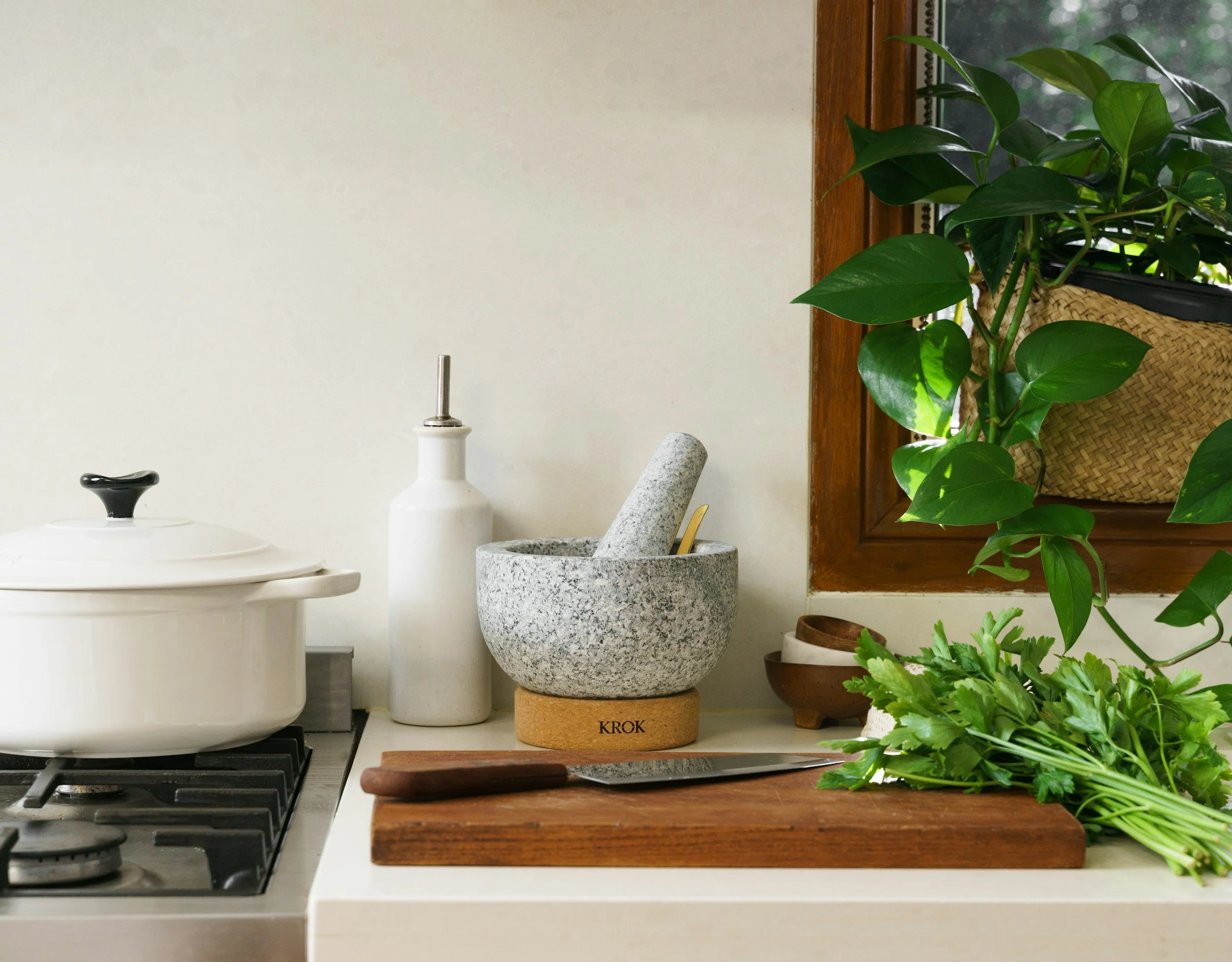
Microplastics may be difficult to eliminate entirely, but small changes can significantly reduce everyday exposure.
From how we filter and store water, to the materials we choose in our homes, these decisions collectively shape a healthier and more intentional living environment.
